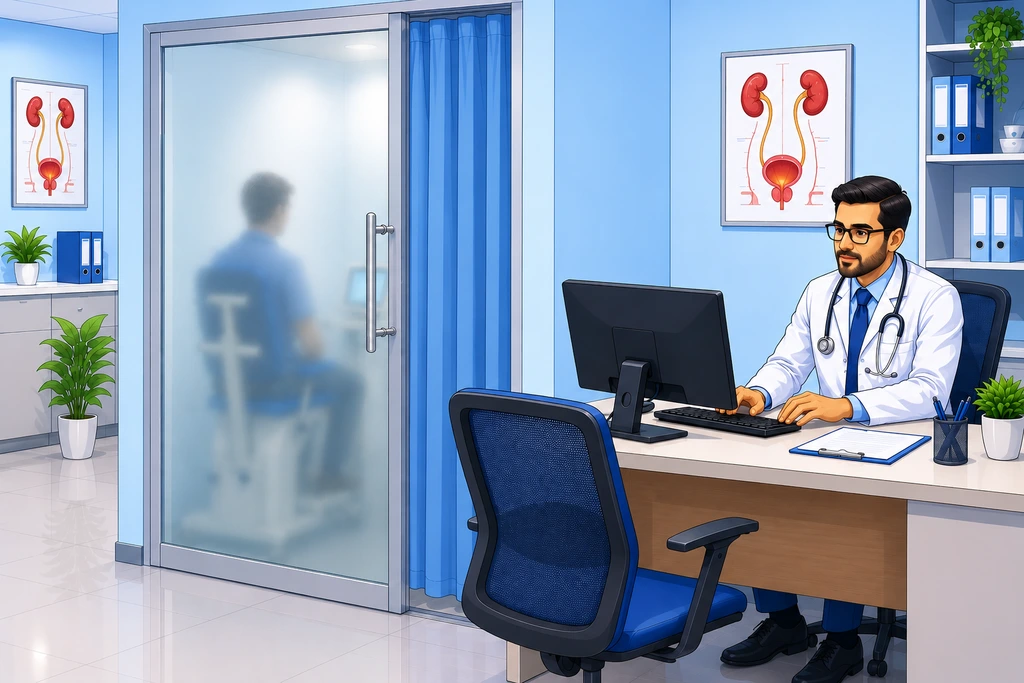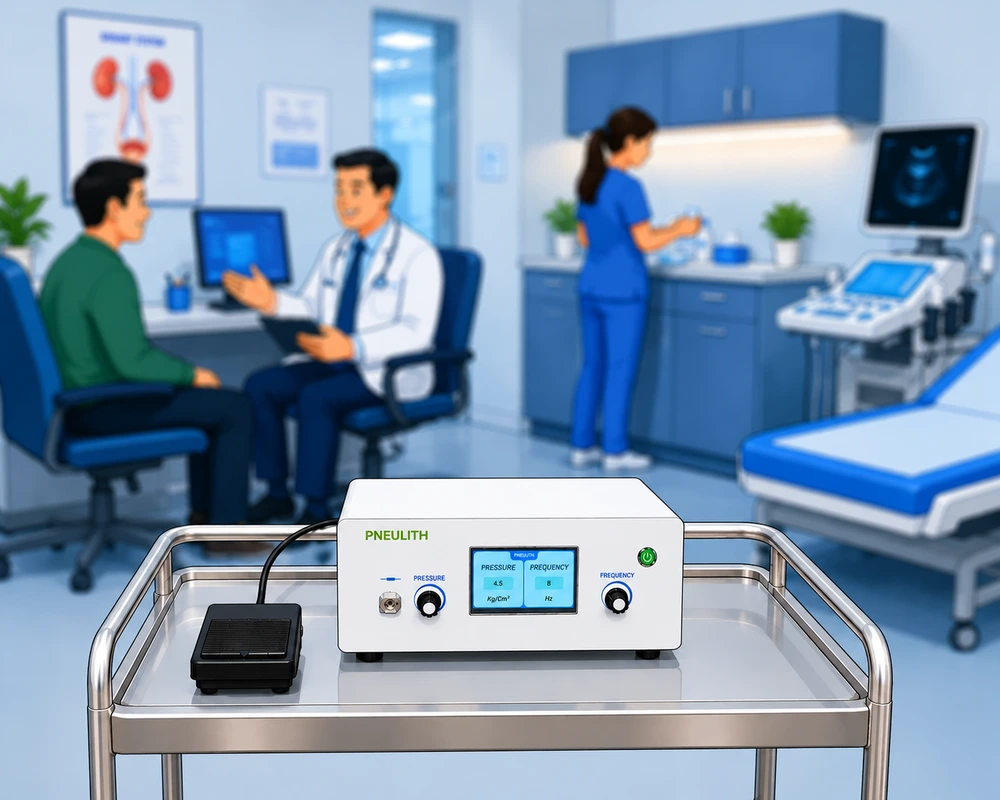
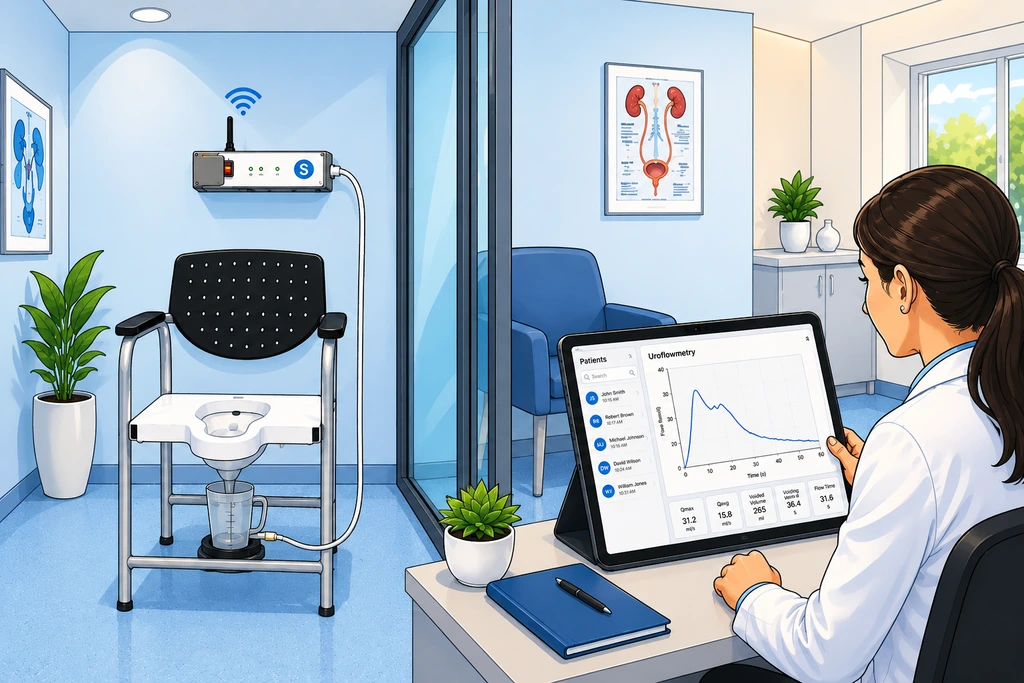
Urology departments today are expected to deliver accurate diagnostics while managing growing patient volumes, limited clinical space, and increasing digital documentation requirements. As healthcare facilities modernise their diagnostic workflows, wireless uroflowmetry is becoming a preferred choice because it supports operational efficiency and simplified infrastructure.
Unlike conventional systems that often rely on fixed installations, modern wireless platforms support seamless digital workflows and flexible deployment, enabling more efficient operations and better use of available clinical space.
This increasing preference among urology departments is not simply a technology trend. It reflects a broader shift toward diagnostic equipment that combines clinical performance with portability, streamlined reporting, and long-term operational adaptability.
Traditional Uroflowmetry Setup Challenges
Before exploring why wireless uroflowmetry is gaining wider adoption, it is important to understand why many facilities are reconsidering conventional setups.
Traditional uroflowmetry equipment often requires fixed installation planning. Diagnostic workflows may become dependent on cable routing, workstation placement, and room configuration. While these systems can perform their intended function, they may create limitations when departments need to adapt to changing operational requirements.
For example, a hospital expanding its outpatient urology services may need to reorganise consultation rooms or diagnostic areas. Equipment that relies on fixed layouts can make such adjustments more complicated than necessary.
This challenge has become increasingly relevant as healthcare facilities prioritise operational flexibility. Many administrators now evaluate diagnostic equipment not only on clinical performance but also on how easily it can integrate into evolving healthcare environments.
Flexible Deployment For Modern Clinics
One of the primary reasons clinics are investing in wireless diagnostic systems is the flexibility they bring to diagnostic operations. Wireless platforms allow departments to position equipment based on clinical workflow needs, improving operational flexibility and supporting more efficient use of available clinical space.
A compact system can be positioned according to workflow requirements rather than infrastructure constraints. Departments can optimise available space while maintaining efficient access to diagnostic services.
Departments can design workflows around clinical needs rather than infrastructure constraints, improving flexibility and making better use of available clinical space. Another advantage of wireless uroflowmetry is its ability to reduce cable management concerns, helping create cleaner diagnostic environments and more organised workspaces.
Modern wireless platforms utilise Bluetooth-enabled communication to transfer data without extensive physical connectivity requirements. Combined with a compact design, this allows departments to position equipment according to workflow needs rather than infrastructure limitations. The result is greater flexibility when configuring diagnostic spaces and expanding services.
Wireless Uroflowmetry System Reduces Infrastructure Dependence
Healthcare facilities often seek technologies that can be implemented efficiently without extensive infrastructure modifications. This is where advanced systems offer a significant advantage.
Installation requirements can influence both deployment timelines and long-term operational costs. Systems that require minimal setup effort allow departments to begin utilising equipment more quickly while reducing planning complexity.
The benefits include:
- Reduced dependence on extensive cabling
- Easier integration into existing clinical spaces
- Simplified installation processes
- Greater flexibility during facility expansion
- Lower disruption during deployment
For newly established urology centres, these advantages can accelerate operational readiness. For existing facilities, these advantages provide the flexibility needed to accommodate departmental changes without major infrastructure adjustments.
The growing adoption of wireless uroflowmetry aligns with broader healthcare trends that emphasise adaptability, efficiency, and optimised resource utilisation.
Supporting Flexible Equipment Deployment
Mobility is becoming an increasingly important factor in diagnostic equipment selection. A Wireless uroflowmeter offers advantages that extend beyond convenience by supporting more efficient equipment utilisation across departments.
Mobility enables clinics to adapt quickly to operational changes, supporting service expansion and minimising disruptions during reorganisation.
The following table highlights the operational differences.
| Operational Factor | Conventional Systems | Wireless Systems |
| Equipment Placement | Often Fixed | Flexible |
| Mobility | Limited | High |
| Infrastructure Dependency | Higher | Lower |
| Expansion Flexibility | Moderate | Strong |
| Space Optimization | Restricted | Improved |
| Deployment Adaptability | Limited | Enhanced |
The combination of portability and compact dimensions makes wireless uroflowmetry easier to implement across different clinical environments without requiring permanent installation. For healthcare facilities planning future expansion, this adaptability supports changing operational requirements without requiring major workflow adjustments.
Smart Uroflowmetry Systems Support Digital Reporting
Beyond mobility, Smart uroflowmetry systems support more efficient diagnostic workflows through real-time flow monitoring, user-friendly software, and automatic report generation. Clinicians can quickly review test data, efficiently generate reports, and manage patient records through systems that integrate with existing PCs and laptops used in healthcare facilities.
Real-time measurement capabilities enable clinicians to review flow parameters immediately after testing. Automated report generation helps streamline documentation and reporting processes. These capabilities are among the reasons wireless uroflowmetry is becoming increasingly attractive to healthcare facilities seeking efficient and digitally connected diagnostic workflows.
While workflow efficiency and reporting capabilities are often the primary focus when evaluating diagnostic technologies, the testing environment also plays an important role. Compact systems with reduced cabling help create cleaner and more organised testing spaces, contributing to Improved patient comfort while supporting efficient clinical operations.
Clinicians increasingly expect diagnostic equipment to support efficient data management and streamlined reporting. Systems that connect easily with computers and existing software environments can help simplify information handling throughout the diagnostic process.
Several factors are driving this trend:
- Growing adoption of electronic patient records
- Demand for faster report generation
- Need for organised diagnostic documentation
- Preference for streamlined clinical workflows
- Increased focus on data accessibility
Modern wireless platforms support these objectives by enabling efficient communication between diagnostic equipment and reporting systems. As healthcare facilities continue to digitise clinical workflows, wireless uroflowmetry plays an important role in supporting connected diagnostic and reporting processes.
For departments focused on workflow efficiency, digital reporting capabilities can provide benefits that extend far beyond the testing procedure itself, supporting more organised diagnostic documentation and digital workflows.
Choosing The Right Uroflowmetry Device
Selecting a uroflowmetry device requires careful evaluation of both clinical and operational requirements.
While measurement accuracy remains essential, decision-makers should also consider how a system supports long-term departmental goals. In addition to technical capabilities, many healthcare facilities consider whether diagnostic equipment is developed under recognised quality management frameworks such as ISO 13485, which is widely used within the medical device industry to support quality, consistency, and regulatory compliance.
The most effective solutions are those that combine reliable performance with flexibility, ease of use, and scalability.
Key evaluation criteria include:
- Wireless Bluetooth communication
- Real-time flow measurement capabilities
- Automatic report generation
- User-friendly software interface
- PC and laptop compatibility
- Portable and compact design
- Easy installation requirements
- Long-term scalability
- Technical support and service availability
Healthcare facilities that prioritise these factors are often better positioned to maximise the value of their investment and successfully implement wireless uroflowmetry within their diagnostic workflows.
Once these evaluation criteria have been established, healthcare facilities can compare solutions that align with their operational and clinical requirements. The FlowComp®-NG Wireless Uroflowmeter is designed to support these priorities through application-based operation, built-in device health checks, calibration support, and patient record management. Access to previous test data and connected-device compatibility also help streamline routine uroflowmetry workflows, making it a practical option for facilities seeking a reliable wireless diagnostic solution.
As diagnostic environments continue evolving, equipment that supports both current and future requirements becomes increasingly important.
Conclusion
The rise of wireless uroflowmetry is driven more by practical operational needs than by technology trends alone. Healthcare facilities are increasingly seeking diagnostic systems that support flexible deployment, simplified installation, efficient reporting, improved space utilisation, and long-term scalability. Features such as wireless communication, compact design, portability, battery-powered operation, and digital integration make modern wireless solutions well-suited to today’s clinical environments.
Features such as Bluetooth-enabled communication, real-time monitoring, automatic report generation, PC compatibility, and portable design are helping redefine how uroflowmetry testing is deployed in modern clinical environments.
To learn how the FlowComp-NG Wireless Uroflowmeter can support your department’s diagnostic and operational goals, visit Status Medical Equipments or contact our team for expert guidance.
Frequently Asked Questions
1. Why are urology clinics shifting toward wireless uroflowmetry?
Many clinics are adopting wireless uroflowmetry because it offers greater flexibility in equipment placement, reduces dependence on infrastructure, supports digital workflows, and helps departments optimise space while maintaining efficient diagnostic operations.
2. What advantages does a Wireless uroflowmetry system offer over conventional setups?
A Wireless uroflowmetry system simplifies installation, reduces cable management requirements, improves mobility, and allows healthcare facilities to adapt diagnostic workflows without major infrastructure changes or room reconfiguration.
3. How does a Wireless uroflowmeter support growing healthcare facilities?
A Wireless uroflowmeter can be relocated easily, making it suitable for expanding departments, multi-room facilities, and organisations planning future service growth while maintaining efficient equipment utilisation.
4. Why is portability important in modern uroflowmetry equipment?
Portable systems provide greater operational flexibility. They can be deployed where needed, support evolving workflows, and help healthcare facilities maximise the value of their investment in diagnostic equipment.
5. How do Smart uroflowmetry systems contribute to digital healthcare?
Smart uroflowmetry systems support digital reporting, organised data management, and streamlined clinical workflows, helping healthcare providers integrate diagnostic information more efficiently into modern healthcare environments.