Every uroflowmetry assessment generates valuable clinical information, but the quality of diagnosis depends on far more than the test itself. Clinicians must review previous findings, identify meaningful trends, correlate results with symptoms, and decide whether additional investigations are necessary. When diagnostic information is fragmented, even accurate test results can become more difficult to interpret.
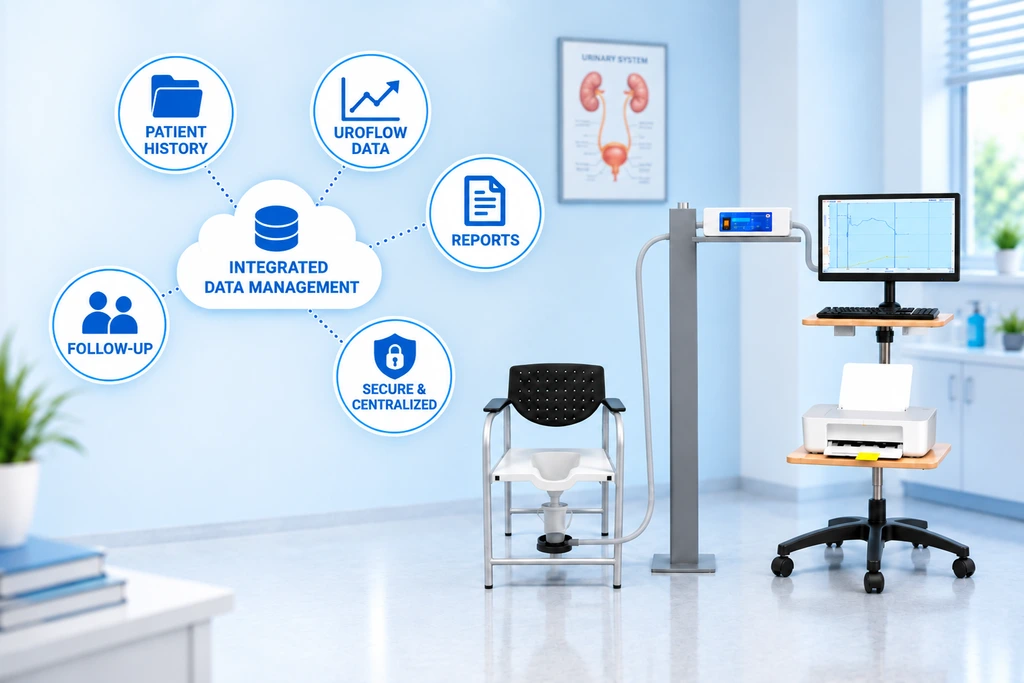
Integrated uroflowmetry systems address this challenge by connecting diagnostic data, patient history and reporting into a unified workflow. Rather than improving measurement alone, integration improves how clinical information is organised, reviewed and applied throughout the patient’s diagnostic journey.
Diagnostic efficiency extends beyond completing a uroflowmetry assessment within a few minutes. Clinicians often review previous reports, evaluate treatment response, compare findings across multiple visits and decide whether additional investigations are required. These decisions rely on accessible, well-structured information that supports clinical judgement without unnecessary administrative delays.
This shift has encouraged healthcare providers to look beyond individual diagnostic devices and focus on how systems work together throughout the patient journey. From report generation to long-term record management, integrated platforms help create a connected diagnostic workflow that supports better continuity, improved collaboration and more informed patient care.
The Importance of Efficient Uroflowmetry
Clinical efficiency is often associated with faster testing, but in clinical practice, it involves much more than reducing appointment times. Healthcare professionals must review results, interpret findings in the context of the patient’s medical history, and communicate decisions without interruptions caused by fragmented information. Integrated uroflowmetry systems contribute to this broader objective by supporting workflows where diagnostic data remains organised and readily available throughout the care pathway.
Diagnostic efficiency should also be viewed from a clinical perspective. The sooner healthcare professionals can access complete and reliable diagnostic information, the sooner they can recognise changes in urinary patterns, assess treatment effectiveness, and determine whether further urodynamic evaluation is appropriate. Efficient diagnosis, therefore, supports both operational performance and clinical confidence.
For healthcare facilities managing a growing number of patients, every stage of information handling influences overall efficiency. Time spent locating reports, confirming previous assessments, or reorganising patient records can gradually affect consultation quality and departmental productivity. When diagnostic information follows a structured digital pathway, clinicians can spend more time evaluating results and discussing treatment options instead of managing documentation. This balance between clinical accuracy and information accessibility strengthens both operational performance and patient care.
Transforming Diagnostic Data into Clinical Insight
Every diagnostic result gains greater value when it can be interpreted alongside previous clinical information. Integrated uroflowmetry systems support this process by bringing together patient records, historical assessments, and current findings within a connected workflow. Rather than reviewing isolated reports, healthcare professionals can evaluate changes over time and build a clearer understanding of disease progression before making treatment decisions.
This approach is particularly valuable during routine follow-up for lower urinary tract conditions, where monitoring trends may provide greater clinical insight than relying on a single assessment. Organised digital records allow clinicians to efficiently compare previous findings, helping determine whether treatment is producing the expected outcome or whether additional investigations should be considered. The result is a diagnostic process centred on informed interpretation rather than manual information retrieval.
Healthcare providers seeking to strengthen connected diagnostic workflows may consider the FlowComp NG Wireless Uroflowmeter, which supports integrated reporting and digital data management in modern urology practices.
Maintaining Continuity Throughout Follow-Up
A digital uroflowmetry system supports more than electronic report generation. It helps create a continuous diagnostic record in which every assessment contributes to a broader clinical picture rather than standing as an individual report. Integrated Uroflowmetry systems improve this continuity by organising patient information in a structured manner, making it easier for healthcare professionals to review historical data during follow-up assessments.
| Conventional Workflow | Integrated Digital Workflow |
| Individual reports stored separately | Connected patient records across assessments |
| Manual review of previous findings | Immediate access to patient history |
| Duplicate documentation | Centralised digital documentation |
| Time-consuming review | More efficient clinical interpretation and follow-up |
This continuity becomes increasingly valuable in busy urology departments, where Integrated Uroflowmetry Systems allow multiple clinicians to review the same patient’s diagnostic history over time.
Continuity also supports consistent clinical judgement. When previous assessments remain readily accessible, clinicians can identify meaningful changes without relying on memory or manually locating older reports. This organised approach reduces interruptions during consultations, supports clearer communication within healthcare teams and helps ensure that each diagnostic decision is based on a complete view of the patient’s clinical history rather than isolated information.
Advantages of PC-Based Uroflowmetry Systems
Modern clinical workflows require more than simple digital connectivity to support efficient diagnosis and long-term patient management. A PC-based uroflowmetry system provides a structured platform where patient records, diagnostic reports and clinical documentation can be managed consistently, helping healthcare teams maintain organised information throughout the diagnostic process. Integrated Uroflowmetry Systems further strengthen this approach by ensuring data remains accessible whenever clinicians need to review previous assessments or evaluate treatment progress.
Well-designed software also contributes to consistency across different healthcare professionals. Standardised report formats, organised data storage and simplified retrieval make it easier for clinicians to interpret findings without spending additional time locating information.
When evaluating a PC-based solution, healthcare providers should consider:
- Supports faster comparison of current and historical results.
- Promotes consistent report interpretation across clinicians.
- Simplifies access to complete diagnostic records.
- Integrates smoothly into routine clinical workflows.
Healthcare facilities looking for software-driven diagnostic workflows may consider the Wired FlowComp NG Computer-Based Uroflowmeter, designed to support organised reporting and efficient data management.
Eliminating Information Gaps In Diagnosis
One of the biggest barriers to efficient diagnosis is not the accuracy of the test itself but the availability of complete clinical information when it is needed. Reports stored in different locations, inconsistent documentation or delays in retrieving historical data can interrupt the diagnostic process and increase the time required for clinical review. Integrated uroflowmetry systems help reduce these information gaps by keeping patient records connected throughout the diagnostic pathway, allowing clinicians to work with a more complete picture instead of isolated findings.
This connected approach is particularly valuable when monitoring patients with chronic lower urinary tract conditions. A single uroflowmetry assessment provides useful information, but reviewing changes across multiple visits often offers greater insight into treatment response and disease progression. Organised access to historical records supports evidence-based decisions while reducing unnecessary administrative effort. As a result, clinicians can spend more time evaluating clinical findings and discussing appropriate management options with patients rather than locating previous documentation.
Choosing Uroflowmetry Equipment Strategically
When selecting urology diagnostic equipment, healthcare providers should consider how effectively the system supports long-term diagnostic workflows, digital record management, and future service expansion. Healthcare providers benefit from considering how well a system supports long-term diagnostic workflows, digital record management and future service expansion. Integrated Uroflowmetry Systems deliver greater value when they fit naturally into existing clinical processes.
Before investing in a solution, healthcare facilities should evaluate:
- Compatibility with existing digital workflows.
- Flexibility of reporting and data management features.
- Ability to maintain continuity across follow-up assessments.
- Standardised reporting that supports consistent clinical review.
Taking a long-term approach to equipment selection helps create a diagnostic environment that remains efficient as patient numbers grow, documentation standards evolve, and healthcare providers continue adopting digital technologies.
Integration Creates Long-Term Diagnostic Value
The benefits of integration become more apparent as diagnostic services continue to expand. Individual improvements such as organised reporting or quicker access to patient information are valuable on their own, but together they create a more connected clinical workflow. Integrated uroflowmetry systems contribute to this long-term value by supporting consistent documentation, efficient information sharing, and structured patient records that remain useful throughout ongoing care.
Long-term value comes from recognising trends rather than reviewing isolated test results. By keeping historical and current assessments connected, integrated systems help clinicians identify changes in urinary function more efficiently and support better-informed follow-up decisions. Rather than functioning as an isolated diagnostic device, an integrated solution becomes part of a broader clinical workflow that supports reliable, evidence-based decision-making over time.
Healthcare providers should also ensure that any uroflowmetry equipment they adopt complies with applicable medical device regulations and recognised quality standards relevant to their region.
Conclusion
Diagnostic efficiency is not simply about completing a uroflowmetry assessment more quickly. By integrating diagnostic data, patient records, and reporting into a connected workflow, integrated uroflowmetry systems help clinicians make faster, more informed decisions while improving continuity of care.
If your healthcare facility is looking to enhance diagnostic workflows with reliable, connected technology, visit Status Medical Equipments’s uroflowmetry systems range to explore integrated solutions that support efficient reporting, organised data management, and confident clinical care.
Frequently Asked Questions
1. What makes an integrated uroflowmetry system different from a conventional system?
An integrated uroflowmetry system combines urine flow measurement with digital report management and organised patient records. These systems allow clinicians to review historical assessments alongside current findings, supporting more efficient clinical evaluation and better continuity throughout the patient’s diagnostic journey.
2. How does a digital uroflowmetry system improve diagnostic efficiency?
A digital uroflowmetry system simplifies report generation, record storage and information retrieval. As part of Integrated Uroflowmetry Systems, it reduces manual documentation and provides quicker access to previous assessments, helping healthcare professionals spend more time interpreting clinical findings rather than managing administrative tasks.
3. Why is access to historical uroflowmetry reports important?
Comparing previous and current assessments helps clinicians identify trends, evaluate treatment response and monitor disease progression. Integrated Uroflowmetry Systems make historical reports readily accessible, providing valuable clinical context that supports more informed decisions without repeating unnecessary documentation or searching through disconnected records.
4. What advantages does a PC-based uroflowmetry system provide?
A PC-based uroflowmetry system improves diagnostic efficiency by providing clinicians with organised access to current and historical patient data in a single interface. As part of Integrated Uroflowmetry Systems, it supports faster comparison of results, more consistent interpretation and better-informed clinical decisions during follow-up assessments.
5. What should healthcare facilities consider before purchasing uroflowmetry equipment?
Healthcare providers should consider how effectively Integrated Uroflowmetry Systems support connected diagnostic workflows, access to historical data, reporting consistency and long-term follow-up. Choosing equipment that integrates smoothly into clinical processes improves diagnostic efficiency and supports reliable patient management.
6. How do integrated uroflowmetry systems support better patient management?
Integrated systems organise diagnostic information across multiple visits, allowing clinicians to monitor changes over time and make treatment decisions based on a complete clinical record. This connected approach strengthens follow-up planning, improves continuity of care and supports more confident diagnostic decision-making.