
Every urologist has experienced the same situation. A patient returns after months or even years of treatment, and the next clinical decision depends on comparing today’s results with historical data. In these moments, the reliability of a uroflowmeter becomes far more important than its specifications in a brochure.
Uroflowmetry is often used to assess patients with benign prostatic hyperplasia (BPH), urethral strictures, neurogenic bladder dysfunction, and other lower urinary tract conditions. These patients are rarely assessed once. Many return for follow-up evaluations over several months or years, making consistency in measurement critical for tracking real clinical changes.
This is why long-term reliability matters. A Uroflowmetry device is more than just a diagnostic device. It becomes part of the clinic’s workflow, patient monitoring strategy, and treatment decision-making process. Understanding what makes a system dependable over time helps healthcare providers invest in equipment that continues delivering value long after installation.
Reliable Uroflowmeter Design Factors
The true test of a uroflowmetry system begins after installation. Most systems perform well during demonstrations and initial use. The challenge is maintaining the same performance after thousands of patient tests.
Consider a busy urology practice that performs 20 to 30 uroflowmetry assessments each day. Over the course of a year, the system may process several thousand tests. During this period, the equipment experiences repeated loading cycles, continuous handling, and frequent cleaning.
If the weighing mechanism begins to drift or the sensors lose stability, clinicians may start to see subtle variations in measurements. These variations can make long-term patient comparisons less reliable. For clinics performing dozens of uroflowmetry tests each week, preventing measurement drift is often more valuable than correcting it later.
Key characteristics include:
- Stable sensor technology that maintains measurement consistency over time.
- High-quality load cells designed for repeated clinical use.
- Durable construction that withstands daily handling.
- Easy-to-clean components that support infection control protocols.
- Software architecture that supports future updates and compatibility with evolving hospital information systems.
For clinicians, these design elements reduce uncertainty. When a patient’s maximum flow rate changes between visits, they can have greater confidence that the difference reflects the patient’s condition rather than equipment variability.
In a clinic where uroflowmetry is performed before every consultation, even a brief equipment issue can delay multiple patients waiting to see the urologist. Reliable systems help keep appointments on schedule and reduce disruptions throughout the day.
Understanding Uroflowmeter Accuracy Standards
When discussing long-term performance, uroflowmeter accuracy is often the first factor clinicians consider. However, accuracy is not simply about producing a correct reading once. It is about producing the same reliable measurement today, next month, and several years later.
Imagine a patient with BPH who undergoes uroflowmetry every six months after starting treatment. The purpose is to determine whether urinary flow is improving over time.
If the system produces inconsistent measurements because of sensor drift or calibration issues, clinicians may struggle to distinguish genuine clinical improvement from equipment-related variation.
| Accuracy Factor | Why It Matters in Practice | Long-Term Clinical Benefit |
| Sensor Stability | Prevents measurement drift | Reliable patient comparisons |
| Calibration Verification | Identifies deviations early | Consistent diagnostic confidence |
| Signal Processing Technology | Reduces unwanted interference | Cleaner flow curves |
| Measurement Repeatability | Produces similar results under similar conditions | More meaningful follow-ups |
| Environmental Compensation | Minimises external influences | Stable performance throughout the year |
Repeatability is particularly important. A reliable system should deliver comparable results when patient conditions remain unchanged. This consistency allows clinicians to focus on genuine changes in urinary function rather than questioning the measurement itself.
For patients undergoing long-term monitoring, accurate and repeatable measurements provide a stronger foundation for treatment decisions.
Features of a Clinical Uroflowmeter System
A modern clinical uroflowmeter system should solve practical problems that occur every day in healthcare facilities. Many clinics still remember workflows that relied heavily on paper documentation. After each test, staff printed reports, attached them to patient files, and manually searched archives whenever historical information was required.
This process becomes increasingly difficult as patient numbers grow. Consider a patient who underwent prostate surgery three years ago and returns with recurring symptoms. The clinician wants to compare current urinary flow patterns with previous results collected before surgery and during recovery.
If records are stored across multiple folders or locations, finding those reports can take valuable time away from consultation.
Modern digital uroflowmeter systems address these challenges through:
- Automated report generation.
- Digital patient record storage.
- Historical data retrieval.
- Multi-user accessibility.
- Electronic medical record integration.
- Standardised reporting formats.
Instead of spending time searching for information, clinicians can immediately review historical flow curves and identify trends. This allows consultations to focus on patient management rather than administrative tasks.
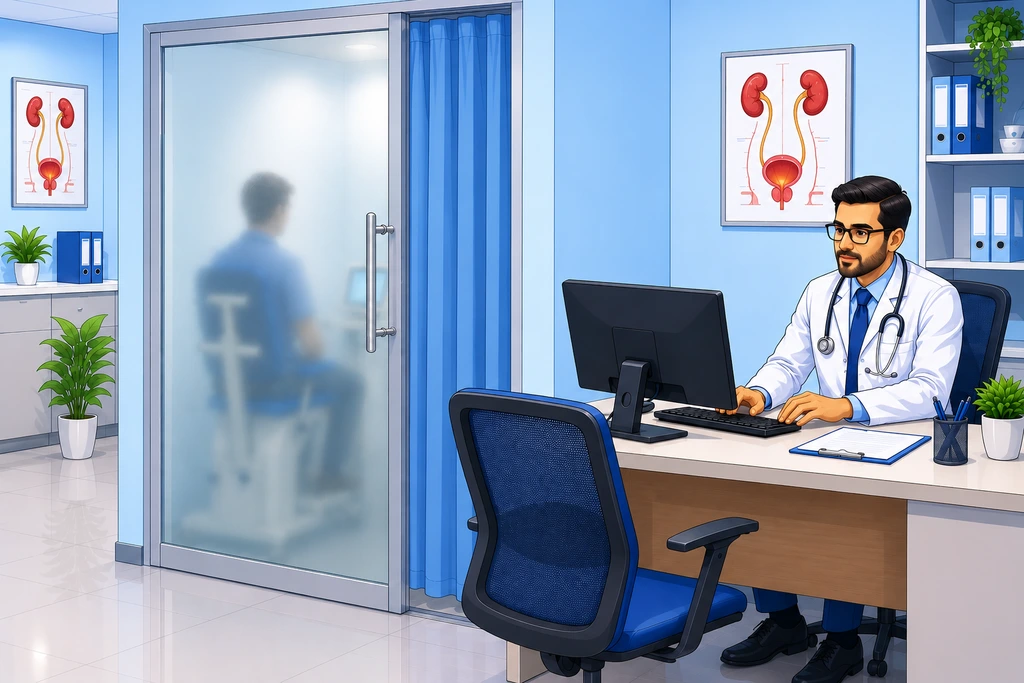
For larger hospitals where several urologists may review the same patient, digital access also improves continuity of care. Everyone works from the same information, reducing the risk of fragmented decision-making. Wireless solutions such as FlowComp-NG further support efficient workflows by allowing clinicians to access and manage patient information while maintaining a comfortable and private testing environment.
Effective Uroflowmetry System Maintenance Practices
Even the most advanced equipment requires regular maintenance to preserve performance. However, maintenance is not only about protecting the device. It is also about protecting clinical schedules.
Imagine a fully booked clinic where several patients are scheduled for diagnostic assessments before meeting the urologist. If the uroflowmeter unexpectedly becomes unavailable, appointments may need to be delayed or rescheduled.
This can affect both patient satisfaction and clinic productivity.
Effective maintenance programs typically include:
- Scheduled calibration verification.
- Routine software updates.
- Periodic performance checks.
- Manufacturer-recommended servicing.
- Staff training on proper operation.
- Inspection of key measurement components.
Another often-overlooked factor is staff turnover. New nurses, technicians, or assistants may join the clinic over time. Regular training ensures equipment continues to be used correctly regardless of personnel changes.
Reliable equipment is rarely the result of hardware alone. It is the combination of quality technology, proper maintenance, and consistent operational practices. In high-volume clinics, self-cleaning systems such as EasyFlow can also reduce manual handling between tests, helping staff maintain efficiency while supporting consistent day-to-day operation.
Measuring Long-Term Uroflowmetry Performance
The most important measure of long-term uroflowmetry performance is whether the system continues to support clinical decisions throughout the equipment’s operational life. When evaluating uroflowmetry equipment, healthcare providers should consider not only current performance but also software support, service availability, and long-term data accessibility.
However, many ownership challenges only become apparent after several years of use. For example, a clinic may purchase a system based on attractive features, only to discover several years later that software updates are no longer available or replacement parts are difficult to obtain. Long-term performance depends on measurement consistency, accessible technical support, software compatibility, and easy retrieval of historical patient information.
Consider a patient who has been monitored for urinary symptoms for five years. If earlier data cannot be accessed easily, the value of ongoing follow-up decreases significantly.
Reliable long-term performance ensures that historical information remains available, measurements remain trustworthy, and clinical workflows remain uninterrupted.
These factors often have a greater impact on ownership satisfaction than any single technical specification. Long-term reliability also depends on manufacturer support. Reliable uroflowmetry equipment should comply with applicable medical device quality and safety requirements, with manufacturers operating under internationally recognised standards such as ISO 13485. A uroflowmeter may remain in service for seven to ten years, making software updates, calibration assistance, and spare part availability important considerations. When support is readily available, clinics can resolve issues faster and minimise disruptions to patient care.
Conclusion
A reliable uroflowmeter earns its value over time. Consistent accuracy, stable measurements, efficient data management, dependable maintenance support, and durable design all contribute to long-term clinical success.
If you are looking for advanced uroflowmetry solutions designed for long-term reliability and backed by dedicated technical support, Contact Status Medical Equipments today to explore our range of advanced uroflowmeters designed to deliver consistent, accurate, and efficient patient care.